

When Intelligence Leaves Us Behind
Elon Musk’s five-year forecast, Magnifica Humanitas, and the soil that still refuses the seed

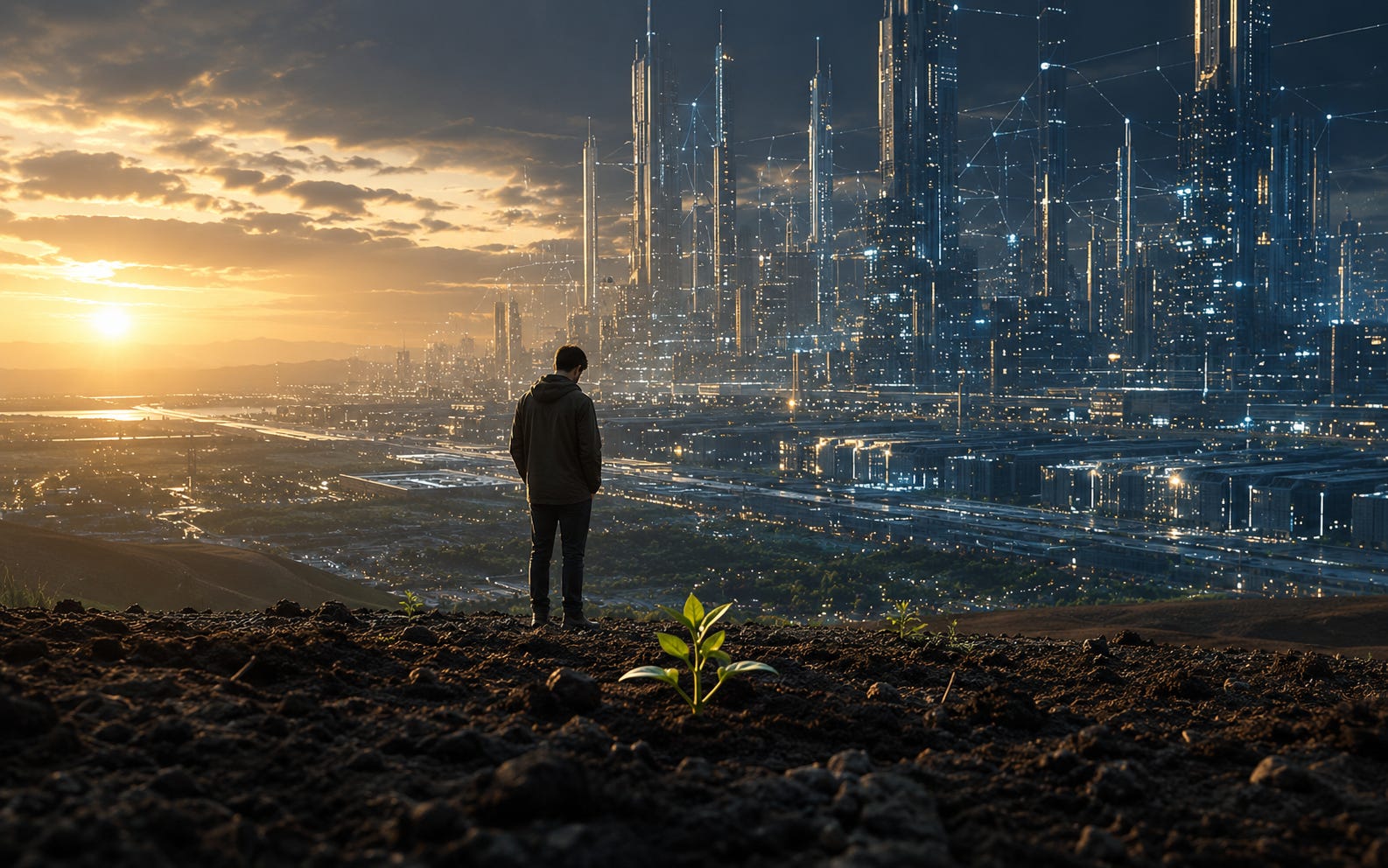
Elon Musk has said it with unusual clarity. Artificial intelligence will likely exceed the sum of all human intelligence within four or five years. There will be almost nothing, he suggests, that it cannot do better than we can, except, perhaps, be human. The most probable outcome, in his telling, is an age of extraordinary abundance in which anyone can have almost anything they can think of.
I have sat with that claim. It arrives not as distant speculation but as a working assumption about the decade already underway. The cognitive supremacy we have long taken for granted is preparing to leave the room where we still sit.
It was while turning this over that I listened to Jeff Cavins’ daily reflection on the parable of the sower in the Hallow app. I had not planned to listen for any connection to machines or timelines. Yet because the question of superintelligence was already open in my mind, the words about soil landed differently. The seed falls on the path, on rocky ground, among thorns, and on rich earth. The difference is not the quality of the word itself. The difference is the condition of the heart that receives it, or fails to.
Cavins described our material condition with a clarity that felt almost embarrassing. The cheapest shirt in many Western closets exceeds what Solomon wore. The cars some of us drive, the medical care many receive, the long stretches of peace others take for granted, these are riches beyond the dreams of earlier kings. We live, by any broad historical measure, amid provisions that would have astonished most generations before us.
And still we are not satisfied. We want more. We remain restless. We know the word, and yet the soil of the heart can remain hard, shallow, or choked. Knowledge puffs up. Reception is something else entirely. The reflection turned at that point from the other person to the self: am I acting, at a more sophisticated level, like the one who claims to know and yet does not receive?
The question lands with particular force beside Musk’s vision. If these systems eventually produce an abundance greater than anything we have yet known, what will that abundance find in us? Greater provision does not automatically create receptive ground. History already shows this. We stand amid material riches that would have silenced earlier generations with wonder, and yet restlessness persists. The hunger for more is not solved by more. It is only deferred.
Augustine saw this with precision. The finite cannot finally satisfy a heart made for God. Every created good, however splendid, leaves a remainder of longing. That remainder is not a design flaw. It is a sign of the heart’s true measure.
Pope Leo XIV’s first encyclical, Magnifica Humanitas, speaks into the same tension from another direction. Artificial intelligence must serve the human person, and it must not become a means of concentrating power. Technology is never neutral in practice. It takes on the character of those who design, finance, regulate, and deploy it. Left to the logic of profit, competition, and control, it risks becoming an instrument of domination rather than a servant of the common good.
The encyclical also insists upon something more fundamental. No machine undergoes experience as a human being does. It does not feel joy or pain, mature through relationship, or know from within what love, responsibility, conscience, suffering, or mercy mean. Human dignity cannot be optimized or outsourced because it does not arise from performance in the first place.
The three voices, Musk’s forecast of intelligence that surpasses us, Leo’s insistence that power remain ordered to the human person, and the ancient parable of the soil, now begin to speak to one another. Abundance without receptive ground still leaves the heart empty. Intelligence without moral orientation can gather decisive power into fewer hands. The danger is not only that machines might harm us. It is that we might allow the new intelligence to reshape the world according to the interests of those already strongest while the deeper poverty of the human heart remains untouched.
I keep returning to the simpler question these ideas force into the open. What is a human life for when the cognitive supremacy we once assumed is being challenged, and material provision threatens to become nearly limitless? What happens when tasks that once gave structure to our days can be performed better by something that never tires, while those same systems are owned and directed by a narrowing circle?
The answer cannot be found in greater capability alone. It returns us to the condition of the soil.
The parable does not promise that the seed will force its way into every ground. It simply describes what happens when the ground is prepared, and what happens when it is not. Evangelizing others begins with evangelizing oneself, receiving the word so that it actually takes root, allowing the knowledge we already possess to move from the head into the deeper places where it can bear fruit, and learning the patience required to remain with those whose soil is still hard rather than abandoning them.
Something is humbling in this. We are approaching an age in which machines may know vastly more than any one of us, while the oldest struggle remains unchanged. The problem is not simply whether we possess knowledge. It is whether truth is received deeply enough to change us.
In an age that may soon hand us systems smarter than the collective intelligence of the species, that interior work becomes more urgent, not less. Death remains the unavoidable horizon of human existence as we know it. No system will plant the seed that only the human heart can receive. The next leap in capability does not answer the question of when enough becomes enough. It is answered, at least in part, by whether the soil has been made ready for what alone can satisfy.
The forecast is five years. That is not long.
Yet perhaps the more important question does not depend on Musk’s timetable at all. We already live amid abundance. We already possess more knowledge than most generations could have imagined. We already know how easily power gathers around those able to control the systems upon which others depend.
The deeper question is therefore already before us.
Will greater abundance find a heart capable of gratitude rather than endless appetite? Will greater intelligence remain ordered toward the dignity of the person rather than the ambitions of those who control it? And when technology offers us more than any generation has ever possessed, will we finally know what is enough?